BS 5930:2015+A1:2020 and Eurocode 7 (BS EN 1997-2:2007) make one thing clear: desk-based permeability estimates don't cut it when you're dealing with Basildon's layered geology. The town sits on a mix of London Clay, Thanet Sand, and patchy river terrace gravels—materials that can vary from practically impermeable to free-draining within a few hundred metres. We run field permeability tests using the Lefranc method for soils and the Lugeon method for rock, giving you direct measurements of hydraulic conductivity that feed straight into dewatering design for the deep excavations typical of Basildon's regeneration zones. The lab team handles everything from borehole preparation to data interpretation, so you get defensible K-values without the headache of juggling multiple subcontractors.
Lugeon tests on Basildon's chalk can show K-values two orders of magnitude higher than lab tests on intact core—fracture flow dominates, and you have to measure it in situ.
Methodology applied in Basildon
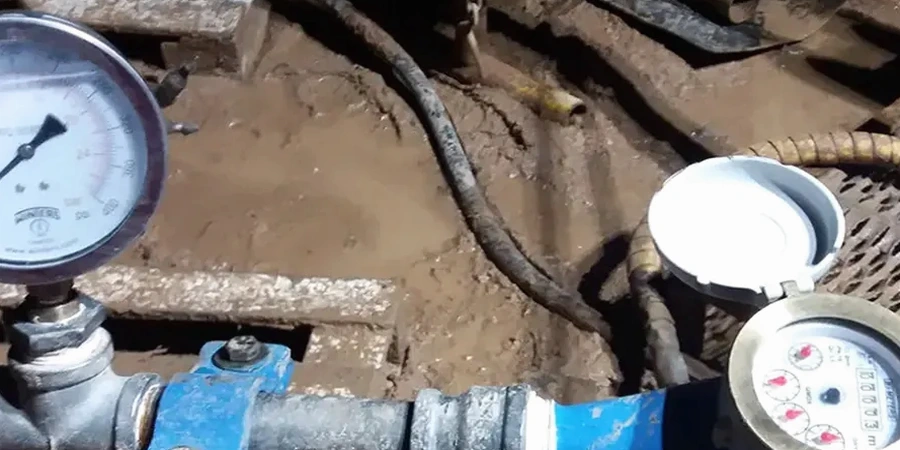
Risks and considerations in Basildon
Basildon's weather—consistently damp, with annual rainfall around 600 mm and a high water table in the lower-lying southern wards—means permeability isn't a static property. A Lefranc test run in August can give you one K-value; the same horizon in February after sustained rain might behave very differently. We account for this by measuring the natural groundwater level before each test run and, where the client's programme allows, recommending repeat tests at seasonal extremes. On the chalk outcrops towards the north of the borough, Lugeon testing catches the fracture-flow component that lab samples miss entirely. Skip that, and your slope stability analysis for a cut on the A13 widening project could be working with numbers that are off by an order of magnitude. The cost of a failed dewatering system during a wet Essex winter dwarfs the investment in a proper field testing campaign.
Our services
Our field permeability testing in Basildon covers the full workflow from test planning through to reporting. We handle the tricky bits—saturated gravels, collapsing boreholes, low-recovery chalk—so the data you get is actually representative of ground conditions, not a smoothed-over version of them.
Lefranc Variable & Constant Head Tests
For soils and very weak rock, we run Lefranc tests using either falling or constant head methods depending on the expected permeability range. The test cavity is carefully prepared to avoid smearing, and we log the stabilisation curve until it meets BS 5930 criteria—no rushing the job to save an hour.
Lugeon Packer Testing in Rock & Chalk
When the borehole hits chalk or limestone, we switch to pneumatic packers and run the classic five-stage Lugeon sequence. Flow is measured at each pressure step, and the Lugeon value is calculated per metre of test section. We flag non-laminar flow patterns that indicate hydraulic fracturing or dilation of existing fissures.
Dewatering & Earthworks Permeability Profiling
For projects where groundwater control is critical—deep basements, road cuttings, landfill capping—we design a testing programme that maps permeability vertically and laterally across the site. The output feeds directly into MODFLOW or Plaxis models your designers are running.
Common questions
How deep can you run a Lefranc test in Basildon's ground conditions?
We routinely run Lefranc tests down to 30-40 metres using rotary or cable percussion boreholes. In Basildon's London Clay, the borehole stands up well so we can test multiple horizons in the same hole. When we hit the Thanet Sand or gravel lenses, we case off the hole above the test section to prevent collapse. The limiting factor is usually the groundwater level and the stability of the test cavity, not the equipment.
What's the difference between a Lefranc test and a lab permeability test on a sample?
A lab test on a 100 mm core gives you the permeability of that intact piece of material. A Lefranc test measures the bulk permeability of the ground mass, including fissures, laminations, and fabric that don't survive sampling. For Basildon's chalk, the in-situ value can be 50 to 200 times higher than the lab value because fractures control flow. For dewatering design, you need the field number.
How many tests do I need for a typical Basildon site?
It depends entirely on the geological variability across the site. A straightforward plot on London Clay might need only two or three tests at different depths to confirm low permeability. A larger site straddling the gravel terraces and chalk, like those around the Basildon Enterprise Corridor, could need ten or more tests to capture the full range of hydraulic conductivity. We recommend spacing boreholes on a grid and testing at least two horizons per hole in layered ground.
What does field permeability testing cost in the Basildon area?
For a single Lefranc test in a prepared borehole, budget £490 to £650 depending on depth and access. A full Lugeon profile with packer setup, five pressure stages, and reporting typically runs £650 to £890 per test section. Mobilisation to Basildon is included for sites within the borough. The total project cost depends on the number of test locations and horizons—contact us with a site plan and we'll provide a fixed-price proposal within 48 hours.